How to choose the right slow feeder bowl for dogs?
Watching a dog wolf down its food in seconds isn't unusual. This haste is far from harmless and can lead to digestive problems or worsen some existing health conditions. To help owners better regulate their dog's eating, the slow feeder bowl has become a must-have accessory. Slowing down eating doesn't just prevent choking: it also supports better digestion and contributes to your companion's wellbeing. Here's how to choose the right model, use it effectively and keep every meal safe.
Understanding the benefits of slow feeder bowls for dogs and cats
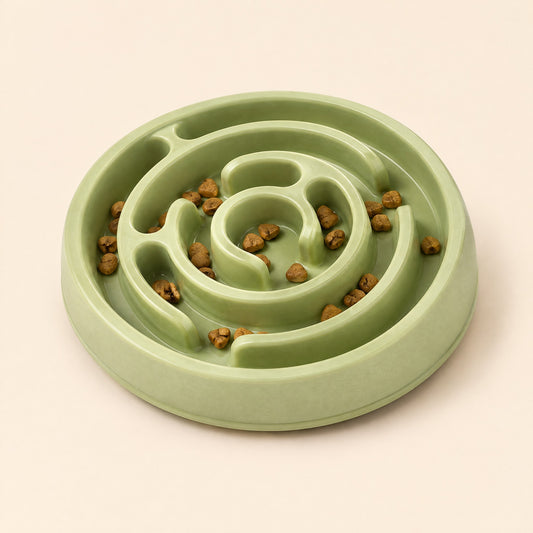
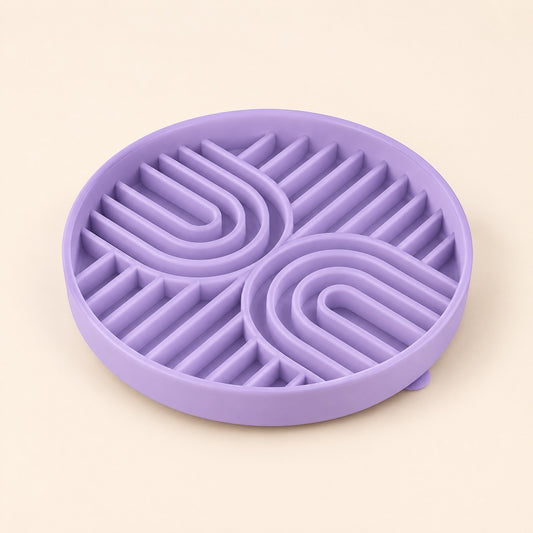
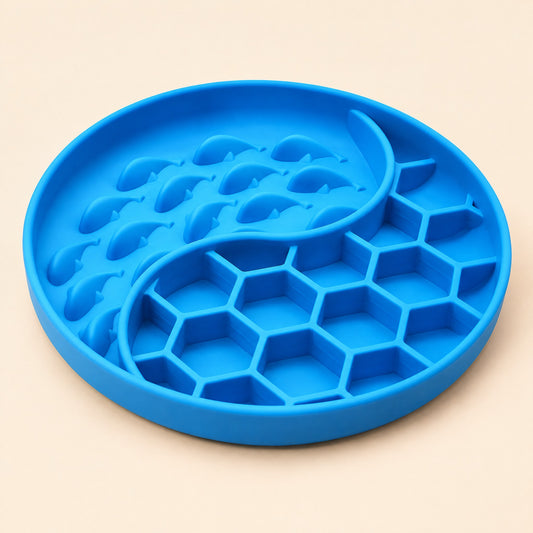
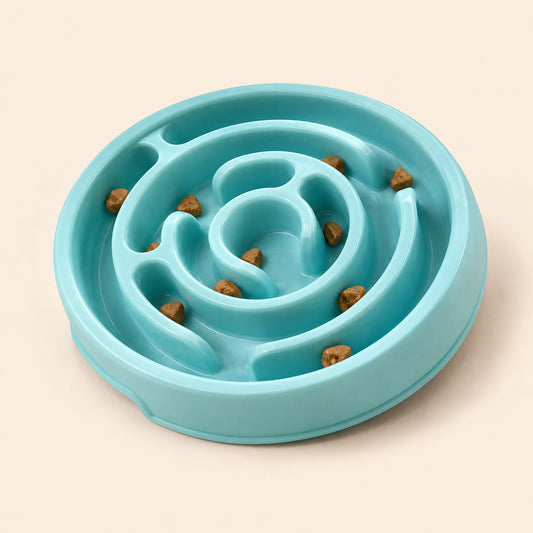
The slow feeder bowl goes beyond simply slowing down eating. This accessory plays a key role in a dog's daily life and also suits cats prone to eating too fast. Patterns on the base, such as the maze, swirl or mountain shape, make the animal think about every mouthful. It's both mental stimulation and a valuable tool for managing digestive problems.
Some models add a playful element, much like an interactive game. By making the dog explore different nooks to reach its kibble, the bowl encourages patience and prevents rushing, often a cause of choking or bloating. For overweight or anxious dogs, this accessory becomes a valuable ally, balancing pleasure and need while establishing a slow eating pace.
Why is slowing down eating so important?
A dog that eats too fast swallows a lot of air, which can cause hiccups or dangerous bloating. A slow eating pace protects against frequent vomiting and eases the strain on the digestive system. Over time, using a slow feeder bowl improves satiety and creates a calming ritual, for a healthier lifestyle.
This controlled way of eating acts as a natural anti-choking aid. Less food swallowed in less time means the stomach has more chance to pre-digest each piece. The result: better digestion, which brings more comfort and reduces the risk of costly vet complications.
Interactive play and mental stimulation at mealtimes
With a slow feeder bowl, eating can become a stimulating challenge. The ridges and twists form a maze that encourages thinking and sharpens your dog's curiosity. These longer meals break the routine, channel the energy of active dogs and offer a welcome dose of mental stimulation.
This approach helps dogs manage frustration around food. Compulsive behaviour gradually decreases, while the dog gains confidence in its ability to "search" for its kibble without constant human help. This creates a more harmonious environment and strengthens the bond with its owner.
Materials and design: how to choose the best slow feeder bowl?
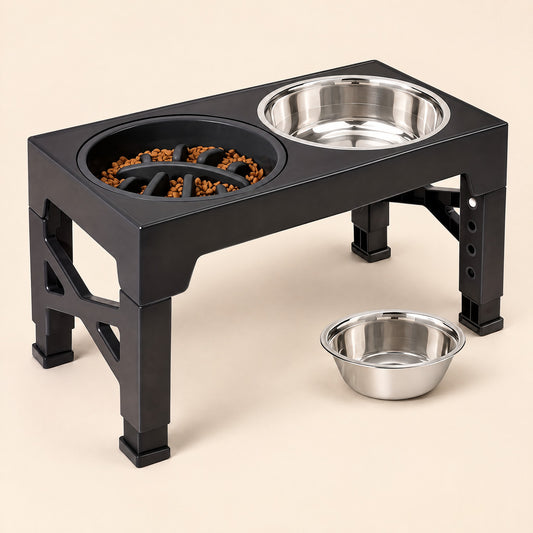
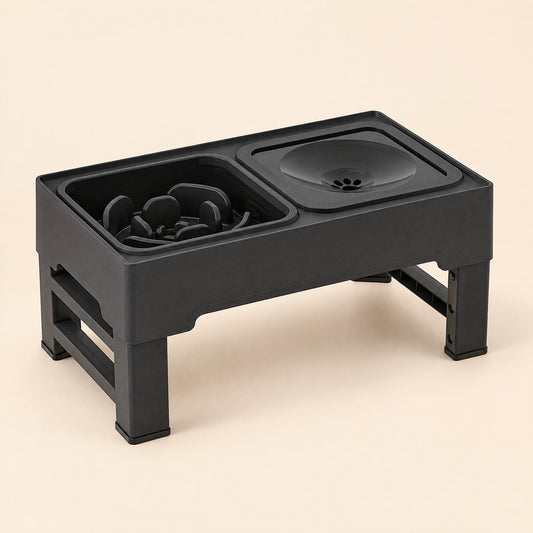
Choosing the right slow feeder bowl means looking at both its durability and how well it suits your dog's lifestyle. Several materials are used, each with its own advantages depending on your companion's needs. An original design has a big impact on the difficulty of the game and so on the whole mealtime experience. Among the most practical and ergonomic accessories is the Raised dog bowl, which combines comfort and effectiveness to improve mealtimes.
Which materials to choose: stainless steel, plastic, bamboo, melamine, ceramic or silicone?
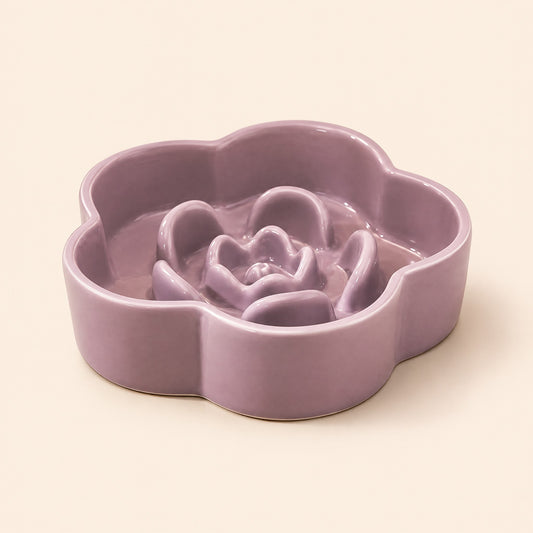
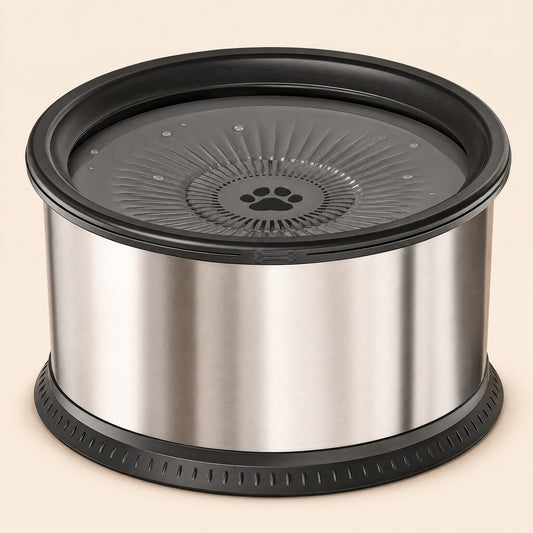
The stainless steel offers durability and resistance to chewing. Easy to clean and non-porous, it's perfect for sensitive or allergic dogs. A bowl in ceramic feels pleasant to the touch and looks elegant, but is more fragile if knocked.
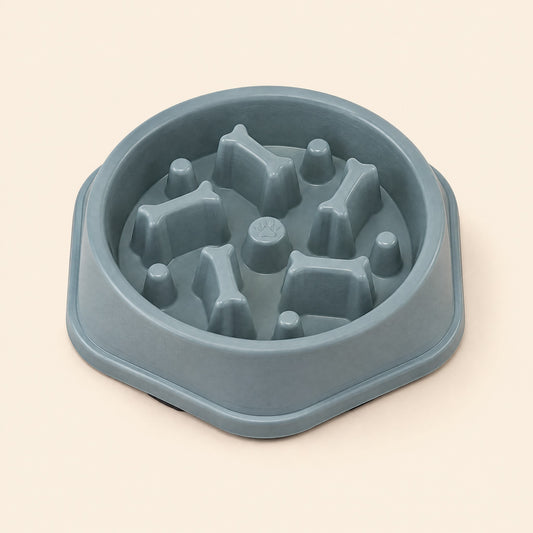
The plastic and melamine stand out for their lightness and the variety of shapes on offer. Do check their quality, though, and choose bowls free from toxic substances. The silicone version appeals with its flexibility and practicality, ideal for travelling. Finally, bamboo is an eco-friendly option, valued for its sturdiness and natural look.
How do design and shape affect how well a slow feeder bowl works?
A maze design, swirl or mountain makes eating take longer by making the kibble harder to reach. The more detours the structure has, the more the dog adopts a slow eating pace. Some models go for originality to boost motivation, while avoiding frustrating beginners.
The choice of shape should also take into account the size of your dog's muzzle and its build. A model that's too difficult could discourage it, while a bowl that's too simple would bring no extra benefit. Adjusting the level of difficulty allows a gentle progression towards healthy eating behaviour.
Practical tips for using and caring for a slow feeder bowl
Getting the best from a slow feeder bowl starts with a gradual introduction so your pet's mealtime routine isn't disrupted. It's best to put the bowl somewhere stable and easy to reach. On top of that, thorough cleaning keeps meals hygienic and makes the bowl last longer.
How do you introduce a slow feeder bowl into your pet's feeding routine?
Before replacing the old bowl completely, alternate it with the new one for a few days. Start by putting just part of the usual portion in it, then gradually increase the amount. This step-by-step switch limits frustration and helps your pet get used to the new accessory, for a slow eating pace that stays calm.
If some dogs are reluctant, put a few really tempting treats in the hard-to-reach corners. The interactive game this creates will spark their curiosity and help with a hesitant start. Patience and praise make this transition to more mindful eating a positive one.
Cleaning tips and choosing a non-slip base for extra safety
Regularly washing the slow feeder bowl in hot water ensures no food or bacterial residue is left behind. Go for a deep clean, especially if you choose plastic or bamboo. Many models are dishwasher-safe, making spotless hygiene easy.
Choosing a bowl with a non-slip base makes all the difference at lively mealtimes. Thanks to its extra grip, your pet stays focused on finding the food instead of pushing the bowl around. That means more safety for your dog and your furniture, and calmer eating habits for the long term.
In short, the slow feeder bowl is a worthwhile investment in your dog's or cat's health and wellbeing. By taking into account the materials, the design and our tips for use, you'll give your companion a richer, safer mealtime experience. Explore our collection of accessories designed to make your pets' everyday life better, starting today.
This page is part of our dog bowls range. For the same need, also take a look at raised dog bowl and cat bowls. For everything else, it's all in our dog products.